GEO Cheat Sheet: Five Actions to Take Now

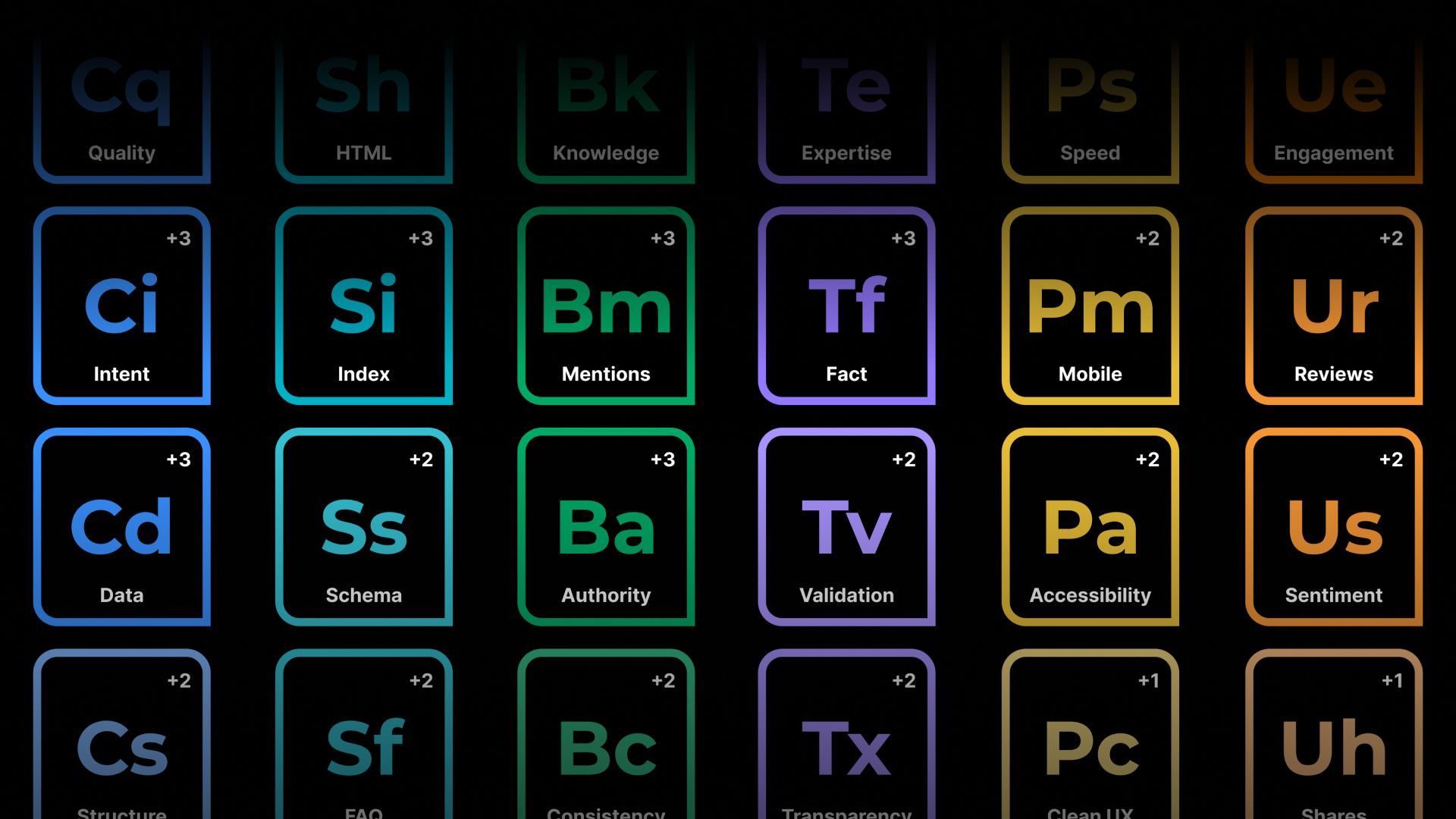
EMARKETER recently released its GEO cheat sheet. The infographic offers recommendations on five things to do now to optimize for AI platforms, including adapting your SEO playbook.
EMARKETER’s first tip is to “move deliberately, not desperately” because “GEO best practices are still forming.” What’s the #1 thing marketers who are concerned about AI visibility can do today?
Stop waiting for the playbook to be finished.
The brands that are going to win in AI search aren’t the ones who waited for the “definitive GEO guide” to drop. They’re the ones who started treating their content like reference material right now. That means structured answers, clear entity definitions, and pages that can be quoted without context — because that’s exactly how LLMs use them.
If I had to name one thing: audit your most important pages for answer density. Can a language model extract a clean, accurate answer from each page without reading the whole thing? If not, that’s your first fix. Every page should be able to stand alone as a source.
The deliberate part is real, though. Don’t chase every AI platform the same way. Understand which systems your audience is actually using to research your category, then optimize for those first. Spread thin and you optimize for nothing.
EMARKETER’s cheat sheet calls out that “many SEO tactics transfer directly to AI search.” Can you share some examples of where you’ve seen this hold true?
Quite a bit transfers across GEO and SEO, honestly — but the reason it works is different, and that distinction matters.
Take structured content. In SEO, we use H2s and H3s to signal hierarchy to Google. In GEO, that same structure helps LLMs chunk your content into discrete, quotable units. Same tactic, different mechanism. Same result: you get cited.
Schema markup is another one. We’ve been recommending JSON-LD for years from an SEO standpoint — FAQPage, HowTo, Organization. That same structured data is exactly what AI systems rely on to understand what a page is about, who authored it, and whether the source is credible. You’re essentially handing the model a fact sheet.
E-E-A-T signals — author credentials, first-hand experience, editorial standards — were an SEO priority after Google’s Helpful Content updates. They’re just as relevant for GEO. Models that are trying to surface trustworthy answers are looking for the same signals Google was: who wrote this, are they qualified, does the content reflect real experience?
The biggest gap is intent coverage. SEO pushed us to go deep on long-tail keywords. GEO pushes you to go deep on conversational questions — the full arc of what someone might ask about your topic, not just the head terms. Same instinct, bigger scope.
We know that major LLMs pull from community platforms like Reddit, YouTube, and Wikipedia. How should brands be thinking about their presence on those platforms as part of a GEO strategy?
This is one of the most underrated parts of GEO, and most brands aren’t treating it with nearly enough urgency.
LLMs are trained on the open web — and the open web heavily weights community-generated content. Reddit threads show up in ChatGPT responses. YouTube transcripts get indexed. Wikipedia is essentially a primary source for entity resolution. If your brand is absent or poorly represented in those spaces, you have a gap that no amount of on-site optimization fixes.
The practical move here is a presence audit. Search for your brand on Reddit, check if your category conversations even mention you, look at what Wikipedia says (or doesn’t say) about you or your competitors. That’s your baseline.
From there, it’s not about gaming forums — that approach erodes trust fast. It’s about earning mentions through genuinely useful contributions: thought leadership that practitioners reference, data that journalists cite, explanations clear enough that communities organically link back to your site. Those are the signals that compound over time.
For our clients, we treat community platform mentions as a GEO factor in their own right. If a brand is invisible on Reddit and YouTube in their category, that’s a real visibility deficit — not a “nice to have” fix.
EMARKETER notes that “credible, first-party content raises your AI visibility.” How does this align with SEO best practices? Is there a genuine double-dip opportunity here?
Yes — and this is where GEO and SEO are most aligned. First-party, authoritative content has always been the foundation of sustainable search visibility. GEO just makes the stakes higher.
In SEO, we talk about topical authority: owning a subject area by publishing comprehensive, interlinked content that demonstrates depth. That architecture — pillar pages, supporting content, internal linking — is exactly what helps LLMs understand that your brand is a credible source on a given topic. The double-dip is real.
What “first-party” means in GEO goes beyond just publishing on your own domain, though. It means content that contains something no one else has: your proprietary data, your client outcomes, your operational experience, your named experts. That’s what differentiates you as a source from every other brand publishing generic thought leadership on the same keywords.
The brands I see getting cited in AI answers consistently have three things: original data or frameworks they created themselves, named experts attached to that content, and a track record of publishing that predates the AI search era. That history matters. Models assign more weight to sources that have accumulated consistent, high-quality mentions over time — not just brands that showed up last quarter optimizing for AI.
So yes — if you’re creating genuinely original, well-structured, expert-attributed content, you’re building equity in both channels simultaneously. That’s probably the most efficient place to put your content investment right now.
EMARKETER notes: “The AI search landscape will look dramatically different in two years.” What do you predict will be the biggest change between now and how marketers approach GEO in 2028?
The measurement problem gets solved — and that changes everything.
Right now, GEO is being treated as a belief system by some and a black box by others. The brands investing in it are doing so on faith and early signals. By 2028, I think we’ll have attribution models that can credibly connect AI-driven brand mentions to pipeline, not just impressions. When that happens, GEO moves from a content team conversation to a revenue conversation — and budgets will follow.
The second shift I’d bet on: personalization at the query level. The AI search experiences we have today are relatively static. You ask a question, you get an answer. What’s coming is systems that understand your role, your context, your prior queries, and surface sources calibrated to you specifically. That means generic B2B content loses its edge fast. Brands that create genuinely differentiated, audience-specific content — not just repurposed whitepapers — will pull ahead.
And the third thing: brand entity strength becomes a real competitive moat. Right now, entity optimization is still a gap most brands haven’t closed. Wikidata records incomplete, Knowledge Panel data inconsistent, NAP data scattered. By 2028, the brands that treated entity consolidation seriously will have a structural advantage in how models recognize and cite them. It’s not flashy work, but it’s defensible.
Any final thoughts?
Start now. Win later.
The marketers who approach GEO like it’s SEO circa 2012 — early, systematic, and patient — are going to look very prescient in a couple of years. That’s not a prediction about technology. It’s a prediction about discipline. The brands that audit their content today, close their entity gaps this quarter, and earn community mentions before AI attribution is table stakes will have a compounding advantage that latecomers simply can’t buy their way into. GEO rewards consistency and history. The best time to start was six months ago. The second best time is now.
Interest in more? Complete the form below to unlock Mod Op’s free GEO audit.

The Latest
We study the game as hard as we play it.
Learn with us what’s now and next.