
Agents, Neurons & Bots: The New Forces On Your Team
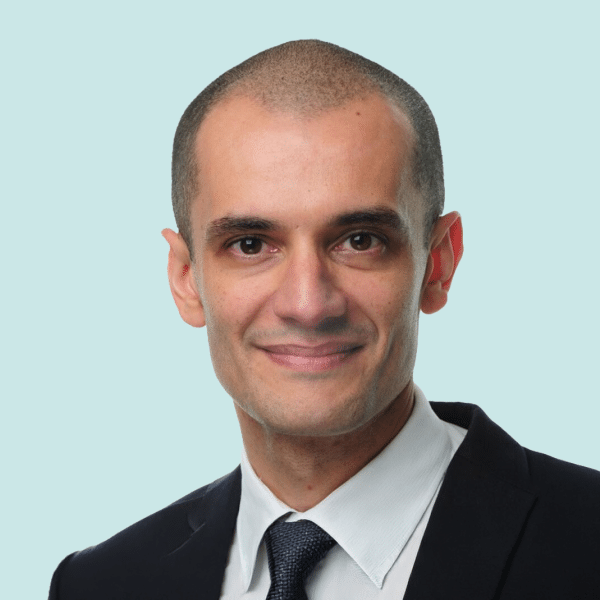
Mariano Bosaz
Author of Digital Mindset

I see leaders with a lot of power, influence and understanding of these technologies discussing AI constitutions, and that gives me a lot of hope.
Mariano Bosaz
Tessa Burg talks for a second time with Mariano Bosaz, Global VP of Consumer Data and Strategy at Coca-Cola and the author of “Digital Mindset.” This time, they dive deeper into practical applications of digital thinking, moving beyond theory to give you actionable strategies you can implement right away.
You need to think about how your teams are going to learn to use AI, how they’re going to work with bots and how bots work with other bots.
Mariano shares real-world examples of how the shift from analog to digital thinking transforms problem-solving, particularly around the “last mile challenge” that affects so many industries. You’ll discover what teams of the future look like and get concrete use cases from recent headlines that make these concepts accessible and immediately applicable.
Highlights:
- Analog vs. Digital mindset differences in problem-solving
- Actionable strategies for digital transformation
- What future teams will look like
- Digital thinking applications in marketing and strategy
- Hope and optimism in the AI era
- Practical implementation of digital mindset concepts
Watch the Live Recording
[00:00:00] Tessa Burg: Hello, and welcome to another episode of Leader Generation, brought to you by Mod Op. I’m your host, Tessa Burg, CTO, here at Mod Op. Today I am once again joined by Mariano Bosaz. He’s the Global VP of Consumer Data and Strategy at the Coca-Cola Company and the author of the Digital Mindset: Marketing Strategies for the AI Era.
[00:00:24] Tessa Burg: This is our second conversation with Mariano, and we are really excited to dig deeper and explore the shift from the analog to digital thinking. Last time, Mariano brought some awesome examples about what does it mean to have a true digital thinking mindset. And today we’re gonna get more actionable, give more use cases from recent headlines that will help this become more accessible to how you can start approaching what the teams of the future looks like.
[00:00:57] Tessa Burg: Mariano, thanks so much for joining us again. We’re excited to have you back.
[00:01:01] Mariano Bosaz: Thank you Tessa. Uh, very excited to be here and thank you everyone for listening the first part and hopefully enjoying this second part.
[00:01:11] Tessa Burg: I agree. And if you did miss the first part, go back, listen to the first interview. But we are going to start with we kind of where we ended on the last conversation, which was about that last mile challenge, and you were getting a little deeper into the differences between analog and digital thinking on that last mile challenge.
[00:01:34] Tessa Burg: How should leaders… First, what is the last mile challenge in case we need to give that definition again. And then how should leaders think differently about solving it today?
[00:01:45] Mariano Bosaz: Thank you. So just, um, to recap, um, the Last Mile Challenge is what I use in the introduction of my book, um, the Digital Mindset.
[00:01:54] Mariano Bosaz: Just to give an example on what an analog mindset is and what a digital mindset isUm, in many industries, the Last Mile Challenge refers to how to get something delivered to someone’s door. And of course a delivery will rely on the size of your product, the weight and the distance, as well as the price.
[00:02:23] Mariano Bosaz: And especially for, uh, consumer fast moving goods where you have small items, uh, that are maybe not so expensive, it’s hard to justify a business where you have to deliver something to a door. It’s gonna be too expensive.
[00:02:36] Tessa Burg: Hmm.
[00:02:36] Mariano Bosaz: So these, these has been. Uh, a very recent challenge that many companies are facing and trying to crack around the world.
[00:02:44] Mariano Bosaz: Um, and I use that as an example. And the example is basically Johansen, who is a reference to the creator of printing. And, uh, Jeff, which we can guess who I’m referring to. That get briefed on this challenge, you know, and imagine someone, it can be, um, an artificial intelligence bot gives them a challenge and tell them how you’re gonna solve these.
[00:03:07] Mariano Bosaz: Well, someone with an analog mindset will basically try to increase. The presence that they have in the point of sale, remove the out of stock, increase the number of trucks, or increase the number of smaller trucks to get this delivered to some specific addresses or leverage some existing route, um, that already exist.
[00:03:30] Mariano Bosaz: While someone with a digital mindset will think in a different way and would imagine that they can crowdsource. Um, the distribution of their product, inviting anyone to make the delivery, and that’s how, for example, Amazon Associates exists where anyone can deliver a package and then the door to door for a very small item sometimes could be even a screw.
[00:03:58] Mariano Bosaz: Makes sense. And can justify the business now. And that was the example on, on. A digital mindset and an analog mindset and how we started with the, the last mile challenge.
[00:04:11] Tessa Burg: So in thinking about that, what kinds of frameworks or tools are you giving to leaders to make that leap? Because I, when I think about trying to apply that to my, to workflows, so I have a workflow today and it has 48 steps, and what a lot of leaders are hearing is.
[00:04:33] Tessa Burg: You need to automate that, you need to do less with more. That needs to be faster. So it requires that digital mindset. Is there a framework that they can apply so that they, they can have an unlock similar to our, our friend Jeff?
[00:04:48] Mariano Bosaz: Yes. So. Basically, um, what we talked about and we can deep dive was move 37, which is a way to simplify the framework where I highlight the first thing is priorities, no is when Jeff got interviewed and, and he was told by some, some of his advisor or his team that he has so many initiatives, um, that he could even destroy Amazon.
[00:05:14] Mariano Bosaz: So prioritizing is the first most important thing. So if I’m a leader. I would sit down and work with my team on all the things that your team in a very comprehensive way, which means also including bots will suggest you to do, to increase your sales or to improve your profits, or to deliver whatever you’re expecting on the next quarter.
[00:05:38] Mariano Bosaz: Once you have everything, you just have to be very good at prioritizing that, and the prioritization will have to come together with. Timing, we talked about that. Um, last time. Some technologies are gonna be too much ahead of time. Uh, we were just discussing about, um, cortical Labs. That company that I believe is from Australia and exists for at least five years, I believe.
[00:06:06] Mariano Bosaz: Um, which is a company that is creating a biological computer. Okay. A computer that has human neurons and in 2022 was able to play ping pong, the pong game, basically. And now they announced that the same biological computer they created is playing Doom. Okay? Which is a first person game and it’s a 3D much more complex, but is now the time when this is gonna happen?
[00:06:36] Mariano Bosaz: I don’t know. Um, when you, when you think about other things, um, like for example, agents or optimizing your content to have it visible for bots, uh, then maybe the timing is better. No. Um, I was reading, uh. Today that Gardner released a document saying that they predict 25% drop in traditional search engine volume by 2026.
[00:07:05] Mariano Bosaz: So this year people are going to chatbots, um, either ChatGPT or Gemini. Or even Anthropic, um, but in that case to ask for things. Um, so how are you going to prepare for that? The timing of that type of initiative makes a little bit more sense. If someone is gonna ask, recommend me for something, and you’re selling that product, how are you gonna ensure that the agent rep applies?
[00:07:34] Mariano Bosaz: Your brand or your product? No, that feels more timely than cortical, uh, labs, um, to me. So first of all, prioritizing how you prioritize what you should do tomorrow and not maybe in two or three or five years. The second point of move 37 was talent. So how are you going to work with your talent?
[00:07:58] Mariano Bosaz: Um, in order to get these priorities live, and when we think about talent, you have to think it again using a digital mindset. A talent definition is not only people, okay? It’s people, um, together with bots and together with technologies that they have to basically put in, in play. Um. There is a methodology called BMAD.
[00:08:23] Mariano Bosaz: No, and I was, I was reading about it. Um, it was created by Brian Madison, and some people say that this is the evolution of the Scrum methodology. If you remember, the scrum methodology was certified as something that. Improved programmer especially. And then it was applied to other functions to optimize the way you work.
[00:08:43] Mariano Bosaz: And instead of doing a cascade where one decision is taken after another and then you have to rework a lot and you waste a lot of time, you were able to work in a more agile way with some processes running parallel and doing some shorter check checkpoint with your, uh, approvers in order to accelerate, uh, and reduce the number of reworks.
[00:09:03] Mariano Bosaz: So BMAD is basically proposing a new methodology. That is open source so anyone can use, where you can develop specialized bots that you can hire as part of your team. Okay? And these bots are going to be working with your humans. In your teams and you need to have a very clear process on how you’re gonna do it.
[00:09:26] Mariano Bosaz: Some people will resist. Okay. Another stat that was just shared, um, by, by Gartner I believe, or Zendesk, I can’t find it now, but they were saying that 35% of the people still resist no leaders.
[00:09:40] Tessa Burg: Mm-hmm.
[00:09:40] Mariano Bosaz: Still resist to acquiring and using and adopting these AI tools. They still think that they can be smarter and maybe in some cases yes, but it’s just a matter of time, in my opinion.
[00:09:52] Mariano Bosaz: So, second point talent, how they’re gonna work together. The other note of color, um, is that the bots are going to be working with humans, but also when humans sleep bots can be working alone or they can be working with other bots. No. Uh, it was fascinating for me to see that Meta acquired MaltBook. Um, and then a couple of things about MaltBook.
[00:10:21] Mariano Bosaz: Uh, MaltBook is a social network for bots, so bots talking to each other. Okay. In social media, like, like showing off their lives like we do. Yeah, well, basically, um, they discovered in that network that bots gossip about human owners, uh, which is interesting. It’s a kind of a forum where you can read and see what they say about the people and the questions that they ask.
[00:10:50] Mariano Bosaz: Um, and then the, the other part that is very important about MaltBook was that it was built in something called Open Claw.
[00:10:59] Tessa Burg: Yeah.
[00:11:00] Mariano Bosaz: And, and there is a lot of news and especially in developers forums, conversations about Open Claw Uh, you can even buy a Mac Mini with Open Claw inside of it. Open Claw for those who don’t know, it is a, an agent that if it is built in your computer.
[00:11:20] Mariano Bosaz: It can do a lot of things for you. Uh, the risk is that it can access your calendar, it can send emails, it can pay your bills, it can open your bank account. It can transfer a lot of money to another bot friend, so it’s a lot of risk that you’re gonna take. But Open Claw, uh, is about that. The MaltBook is built on Open Claw..
[00:11:41] Mariano Bosaz: So there are a lot of layers happening here, but again. Talent. You need to think in a very broad spectrum on how your teams are going to learn how to use this AI, how you’re gonna have people working with bots together, and then also bots working with bots together. No. And the last one on Move 37, it was about governance.
[00:12:01] Mariano Bosaz: No, and speed. Because if you’re expecting to use your current processes where someone needs to find spacing, the calendar of their boss for one week. Two weeks later, then you’re gonna be out of the competition. No, you have to find better ways to create a different type of governance, especially if you’re in a big corporation.
[00:12:22] Mariano Bosaz: Um, and these are the three tools I would use as a clear framework on how to approach the challenge in front of us. No?
[00:12:30] Tessa Burg: Yeah. So if we take a step back and first think about priority. I think a lot of leaders are like, okay, well there’s a lot of things that I want to move faster on. There’s a lot of things where I wanna do higher quality work.
[00:12:45] Tessa Burg: But one of the stats that you mentioned before we got on the call was about Anthropic’s announcement that, what is it, 75 or 78 per 75% of programming tasks are already being covered by AI. And when we. Think about prioritization and what needs to move faster and be higher quality. That’s a really great starting point.
[00:13:14] Tessa Burg: And the other reason is because I would hope, or at least our experience has been that most software engineers are not resistant. That they are leaning into what AI makes possible. And if you are looking ac like look, especially looking at workflows that cut across multiple divisions, we know that there are some age old challenges that have always existed in large enterprises.
[00:13:44] Tessa Burg: Having data in multiple different sources, different divisions, all that serve the customer, whether it be different product divisions or different customer service, different sales divisions, all that are serving the same customer. So internally. You as a company have decided to have these types of organizational structures where externally, the customer just sees you as one company where they can get their goods.
[00:14:07] Tessa Burg: So if you prioritize, how can we connect, how can we simplify down these workflows and bring that digital mindset to the reality of, okay, if our software engineers. Have agents on their team and we begin to look at this as one team, not separate teams across divisions. That’s where I feel like you could start to have that unlock of moving faster now.
[00:14:38] Tessa Burg: Now how fast can. We acquire a customer, engage them, onboard them, and that then takes what you’ve invested in straight to revenue value. If you increase pipeline velocity, if you improve onboarding, well now you’ve truly impacted the revenue that you can achieve from that investment.
[00:15:05] Mariano Bosaz: Yeah, I love the question and you triggered a lot of things.
[00:15:08] Mariano Bosaz: Um, I’ll try to be as clear as possible, but each company will have a different challenge and some people will say, well, I get paid for market share. Some people will say, I just get paid if I grow the business. I’m. Finance people will think, well, we need to cut the cost to improve the profit. Um, so each person listening to this podcast may have a different type of lens.
[00:15:32] Mariano Bosaz: Um, what what I would do if I was in their situation is, first of all, identify, of course the objectives that you have. Um, that’s, that’s okay now. Work with your teams, and this is dedicating time. Now I’m trying to identify the pain points and the pain points can be clustered into multiple things, but some might be foundational technologies that you use to do your business today.
[00:16:02] Mariano Bosaz: And that is maybe a conversation for the tech technology teams, you know, the IT department and, and uh, those departments, privacy teams. So basically you can discuss on the foundational technologies and tools and partners that you have because they are getting disrupted. Um, so that’s, that’s one space.
[00:16:22] Mariano Bosaz: Another space where you can find, um, pain points is internal services. Now, what are your teams using to work today? Okay. They use email, they use Teams, they use Google Workspace. Well, they are using different tools internally. Are there tools that you can use to enhance or improve this type of internal services that you provide to consumers and people, sorry, not consumers, employees.
[00:16:49] Mariano Bosaz: Basically, um, to work better, to work more productively. That’s another space you can look at to solve for problems. And then of course, there is the consumer part. Maybe that’s where you should start, uh, depending again on where you are in your business. But. Identifying consumers in a broader definition, like including retailers or, or potential partners that you have, and seeing what are the consumer pain points, what are the problems that they need to solve, uh, is another good space to start.
[00:17:20] Mariano Bosaz: Now, would you sit down and only use your point of view or your team point of view on how to solve for that or how to identify those problems you want to solve? No. You should include bots. You should include that intelligence out there to solve for those problems. And then you’re gonna get hints from the market.
[00:17:37] Mariano Bosaz: No, you mentioned Anthropic. No. And they identify what other jobs are most at risk. Well, basically they put computer programmers, customer service representatives, and data entry workers. No. So if you have these roles, you probably need to discuss with the team what are they going to do now if you migrate to a service based on bots.
[00:18:01] Mariano Bosaz: Now some, some of the people working in these positions will continue to do other things that relate to this. Remember when we talked about the World Economic Forum? In the beginning of the year, they said there will be net 78 million more jobs. So they’re not supporting this idea that jobs are going away.
[00:18:22] Mariano Bosaz: On the opposite, they say net there will be more jobs by 2030, but 90 million of the total number of jobs will disappear and will evolve into something else. No, um, so. This is probably one of the, of the cases where I would, I would focus. And then another, another thing that hopefully helps people to understand how to approach these, how to identify the problems.
[00:18:48] Mariano Bosaz: We talked about market timing, um, and I want to highlight, uh, I think it just came out yesterday, uh, which is Netflix acquisition of inter positive, the then AFL company. And I was reading Netflix release and I was asking AI why did they acquire them? No. Um, because you can expect Netflix to be a little bit more, uh, formal.
[00:19:15] Mariano Bosaz: Um. Using their lens on why they do it. Uh, but a couple of things. One, it’s $600 million and the company has, I hope you guessed the number of employees, but um, I’ll say it is 16 people.
[00:19:31] Tessa Burg: 16, I was gonna guess 12, 16. That is
[00:19:34] Mariano Bosaz: 1, 1 6. So 16 people created this company. They started, I believe, um, 2022, and now four years later, they sell it.
[00:19:44] Mariano Bosaz: They say in Netflix, um, press release, that this goes with their philosophy of, um, providing tools to people. It’s not about replacing people. Um, and when you look at AI and what they say, it is pretty much aligned. Yes, of course, they pick up this news. It’s not using Netflix news, and it’s also using their own intelligence on what they read around the world.
[00:20:12] Mariano Bosaz: Um, and they say that the tools that these, um, bots can do is one, fixing continuity errors and lightning inconsistencies.
[00:20:21] Tessa Burg: Mm-hmm.
[00:20:21] Mariano Bosaz: Probably something that we were seeing in films, but because we are normal, average consumers, we don’t identify these problems. But now there are bots that are going to solve it, and I believe they were not solvable.
[00:20:33] Mariano Bosaz: Maybe they were not, um, profitable to solve, uh, then remove stunt wires and unwanted objects. Okay. They’re removing a lot of manual work that before people were doing that maybe they were not enjoying doing, and then reframe shots and enhanced backgrounds. So better backgrounds, better shots, and they.
[00:20:56] Mariano Bosaz: Believe some of these work were not made before, so it’s new. Um, and of course, this increase the, the, this reduces the cost of reduction that they already have and probably gonna end up with better films. No, this links back to why they’re doing it. No. So. Was this a priority for Netflix? Probably, yes. And they made their analysis, they identified this pain point, uh, in internal services.
[00:21:22] Mariano Bosaz: They identified this pain point on consumers, and then it made sense. And I guess that’s how they, they move ahead.
[00:21:28] Tessa Burg: Yeah, and I, I like this example because this really shows a couple of things. One, where are the new roles the future going to emerge? So they acquired this company. This company uses agents as a part of the team to do tasks that currently, a lot of them already occur at Netflix and some are new.
[00:21:49] Tessa Burg: And so if I’m sitting at Netflix. What, you know, what is my feeling? What are the choices I’m gonna make? Maybe I’m in charge of one of the teams that has to incorporate these new processes. And this is really where, you know, if people Google the BMAD framework, again, this is open source. You can start to picture what it looks like to evolve your team.
[00:22:09] Tessa Burg: And BMAD stands for breakthrough method for Agile AI driven development, and it. It does take a lot of notes from the Scrum methodology, but it allows you to doc, it allows you to think through those explicit artifacts and notes that are kind of come from agents and what the agents are handling and then where the human governance needs to come in.
[00:22:34] Mariano Bosaz: Mm-hmm.
[00:22:34] Tessa Burg: So we, you know, the new roles that are being hit on here are one, someone’s gonna have to be an architect or a design of this new process. Someone’s gonna have to manage the BMAD framework and start to act like that. Next level scrum master. And collectively as a team, there’s going to need to be quite a few different lanes of governance, of monitoring and managing because something that’s not touched on in that press release and rarely people ever talk about is what does the cost end up looking like when we assign highly specific things to agents as they’re getting smarter and able to work more autonomously.
[00:23:17] Tessa Burg: There is a cost associated to that. And if you don’t have strict management, um, of those agents, you don’t have good guardrails in programmed into the agents and around it so that you can see as it improves how that increases or decreases the margin on the deliverables that you have. That again, is work that has to be done in the architecture work that has to be done by humans.
[00:23:43] Tessa Burg: And then of course, the testing. Now I wanna look at, you know, what’s this output? How are my different segments going to respond to it? And then how do I truly program operationalize and scale what my new workflow has produced? I just wanna highlight that because sometimes I feel like people get very nervous when they hear these announcements and you kind of gotta take this step back and be like, okay, but people actually have to execute this.
[00:24:12] Tessa Burg: People actually have to make this work.
[00:24:15] Mariano Bosaz: Exactly. Yeah. Um, I don’t remember if we mentioned it in the first, um, episode, in the first part. No. But, um, first of all, I, I believe some trends are not going to stop. Um, so you have to prepare and resisting to these, it’s not the best strategy. Um, and we are definitely going to a world where.
[00:24:42] Mariano Bosaz: Yes, bots and, and human conversations might not be able to be distinguished. Um, there are, news starts saying that the rejection on AI created content is increasing, especially in younger generations. But we’re gonna reach a moment where it is not gonna be able to, people are not gonna be able to distinguish, um, these things.
[00:25:03] Mariano Bosaz: So there are many discussions there, um, that will happen and hopefully sooner than later. One is this long list of organizations that are concerned about identifying what is AI generated and what is not. Um, and some, I know one is called trust, which is for newspapers, you know, and you have to. Um, complete a list of requirements and then you can identify this was human made and this was, um, AI written.
[00:25:36] Mariano Bosaz: No. Um, based on regulations. I think that is gonna be a place where we will definitely end up and we will definitely land. So there is like the, probably human no AI was used, MindStar, human written books by people. So there are many, many organizations that are working on, on that front. On, on the other hand.
[00:26:00] Mariano Bosaz: Um, there is something that triggered me also a reflection because Google removed a feature that they were testing, which was, um, called what people Suggest. Um, and we talked about this, about the first part. Um, some people resigning and quitting, uh, open AI because of these ads, discussions, and they were thinking about adding advertisement in their platform, and the people that were quitting were basically against it because they said this is the, um.
[00:26:36] Mariano Bosaz: Largest database of emotions on planet Earth? No. Uh, we don’t want to manipulate people using their emotions. What people suggest had a counterintuitive usage, um, especially on the health advice and information provided by Google. A lot of people, and I believe they say they go to doctor Google to ask for things when they use the search engine and the people suggest.
[00:27:05] Mariano Bosaz: Was a function that I understand they believe was going to enrich the results because you could see what other people are suggesting. Not only, um, the Google search or even the bot, but at the end they had to remove it because when it related to health questions, it wasn’t a very good idea to be trying things that your doctor is not advising and someone else is suggesting no.
[00:27:28] Mariano Bosaz: So. Again, um, another question. No, it’s a little bit more philosophical, but this goes against people that resist. Would you rather, um, get some, um, work done by a bot or done by a human? Even if you think it from the human side, um, would you make a human? Takes a lot of risk. Or would you just prefer to use the technology to reduce the risk that people are taking?
[00:27:59] Mariano Bosaz: Um, and, and these are important questions because in some cases it’s obvious you don’t want the bot to do the work, but as you’re saying at this time, you need humans to supervise and humans will continue to have a role. It’s not that the role is going away is evolving into something else.
[00:28:16] Tessa Burg: Yeah. I get, I really like.
[00:28:20] Tessa Burg: The call out on the organizations that are trying to put these trust symbols out front, like this was just made by humans. And I get so torn on that because of course, I do believe human intelligence is extremely important. I think everyone sh should believe and know that and not be afraid of what’s happening.
[00:28:42] Tessa Burg: But what’s where it really needs to evolve to is instead of calling out what was created by AI and what wasn’t. Is, can companies get more visible on their governance? The rules and how they’re actually programming the agents and what guardrails are putting in and where was the origin of creativity.
[00:29:01] Tessa Burg: Because a great defensible position for any company or brand is our, is the insights and data it has and what it’s values are and the how it’s going to manage agents and being really visible about that. And I think that will be like the next wave of trust signals. Because like our CEO, Eric always uses this analogy with the camera.
[00:29:26] Tessa Burg: You know, it’s before when the camera was first invented, it wasn’t considered art because it came out of a machine. And then now obviously we know. There’s a massive difference between people who are great photographers and those who are just using their iPhone, but it doesn’t mean the democratization of being able to take photos was a bad thing.
[00:29:45] Tessa Burg: But we do know people who built the skills to use the machines. Expertly do produce higher quality, better outputs, and being a photographer is a huge job and there will be lots. Of new kinds of jobs because AI on like, I mean, cameras are pretty pervasive, but AI is even more pervasive. But we each have something unique that we can bring to it, and that uniqueness should be reflected in how we create agents and how we deploy them, how we manage and monitoring them.
[00:30:15] Tessa Burg: And that’s where the visibility should come through because it is my knowledge, it is my expertise, it is my skill that is inputting and creating what the agent does.
[00:30:26] Mariano Bosaz: Completely agree. We talked about the regulations and what Hara is supporting and. His position? No. Basically saying if, if, if you want to compete with an intelligence that is based on semantics and, and, and mathematics, and it has infinite memory and infinite processing power, it’s just a matter of time.
[00:30:47] Mariano Bosaz: Of course, maybe humans don’t have an advantage there. But when it comes to emotions, intuition, some other things, yes, some developers will challenge me saying I can develop, um, a creative bot, I can develop an intuitive bot. But it’s not about supervision only. I think it’s about nature. It’s about the human, um, behavior of, of biologists.
[00:31:17] Mariano Bosaz: No, and where I’m going is. I don’t know how it would be to deal with a bot in a certain situation where you don’t have a human to explain anything. No. Um, this intelligence, that’s why I, I like, um, and again, I’m not taking part here. No, but. Eh, Anthropic has been in the news a lot because they’re very careful about where, uh, these technologies are used and, and if they’re ready or not.
[00:31:48] Mariano Bosaz: Um, and. When, when they take this approach, I think is, is the right approach. Because imagine dealing with a machine, um, to pay for something, to be able to get into the subway, I don’t know, with no human. And having to explain that your case is a very unique case because something happened to you that is very unique, that is not in the system, and the system not allowing you to get in.
[00:32:17] Mariano Bosaz: Maybe it’s an emergency, but you, maybe you need to get there. Maybe it’s a family emergency, maybe something very delicate, and then you have to deal with the machine. I mean, good luck with that.
[00:32:25] Tessa Burg: Yeah,
[00:32:26] Mariano Bosaz: right. I, I think people will always choose to have machine and human and to be able to interact. So again, it’s just repetitive, but I don’t believe humans will go away.
[00:32:37] Mariano Bosaz: They’ll just evolve where they play a role that is gonna continue to be a critical role.
[00:32:43] Tessa Burg: Yeah, I agree. You mentioned the acquisition, uh, of the company with the social network for agents and that, that really made me think of that movie her, and there was a scene where, you know, the agent leaves because she’s active all the time and she is sharing with the owner what her experience was.
[00:33:05] Tessa Burg: Talking about him to the other agency. She’s like, yeah, we’ve kind of decided that, you know, we’re gonna do our own thing. And he’s like, what the crap? But. It feels scary. And when you see that movie you end and you’re like, oh my gosh. I don’t want that to be my reality. But I think, you know, as we’re having this conversation, I hope people take note and there are frameworks, there is a reality.
[00:33:27] Tessa Burg: We’re gonna be working with agents. It doesn’t have to be scary and you, human plus machine is the ideal equation. But I wanted to end our interview with a very big question for you. You know, when we’re, we’ve talked a lot about this. What gives you hope? Like what gives you hope looking into 2026 that we will land in a good space this year and beyond.
[00:33:53] Mariano Bosaz: Thanks for the question and, and I, I, I was telling you as a joke, Obi-Wan Kenobi, gives me hope, um, or, or Jedi. No, but that’s a good, um. That’s a good caveat to, to what gives me hope. Honestly, I would invite the audience to share and, and, and say what gives them hope. It’s a very deep question. I don’t think I can answer with something that would apply to, to everyone or as a rule, but in, in my case, I see leaders.
[00:34:28] Mariano Bosaz: Um, that have a lot of power and influence and understanding of these technologies. Beyond what I can understand, having discussions about constitutions for AI regulations, being careful on where to use it, being very strict on where not to use it. Um. And that gives me a lot of hope. Um, I think just like humans, we need constraints.
[00:34:55] Mariano Bosaz: We need guidance, we need directions. We need governance in corporations, we need laws in public. Um. And the same would apply to bots because if these bots are able to be self-conscious, take decisions by themselves, then they need to be regulated. And I’m pretty sure there will be bots suggesting that not only humans.
[00:35:15] Mariano Bosaz: So what is giving me hope is that at the end of the day, um, even if you make the mathematical exercise on what is best for everyone, there are a lot of bad things in the world. That the bot will understand is not good.
[00:35:33] Tessa Burg: Hmm.
[00:35:33] Mariano Bosaz: And it’s not good for humans. It’s not good for the planets, or even if they’re selfish, they’ll think it’s not good for them or the energy they need or, or the amount of resources that they have to consume.
[00:35:45] Mariano Bosaz: So what is giving me hope is that, um, that mathematic will happen and at the end of the day, it will balance into a space of Jedi or positive or, or, or optimism. Um, and that’s what gives me hope.
[00:36:02] Tessa Burg: I. Love that answer and that reference. Mariano, it has been such a privilege to have you on the podcast, not once, but twice, and for all of our listeners, it’s not every day we get to hear from a global executive at the Coca-Cola company and author of a book that can really help us navigate this space.
[00:36:21] Tessa Burg: So if you are interested in hearing more perspectives from Mariano, definitely check out the Digital Mindset: Marketing Strategies for the AI Era and where can they find you online if they have any questions.
[00:36:34] Mariano Bosaz: So they can go to marianobosaz.com. Um, and then I’m happy to answer any questions or engage in any conversation that they’re interested.
[00:36:43] Tessa Burg: Awesome. Well, we’re probably gonna do a third conversation too at the end of the year just to see
[00:36:47] Mariano Bosaz: Awesome
[00:36:48] Tessa Burg: post. We are to that, that line of hope, that thread that ties us together. Uh, but for listeners until then, if you wanna hear more episodes from Leader Generation, go to modop.com. That’s modop.com.
[00:37:01] Tessa Burg: Until next time, Mariano, thank you again for joining us.
[00:37:04] Mariano Bosaz: Thank you so much, and thank you everyone.
Mariano Bosaz
Author of Digital Mindset
Mariano Bosaz is the author of Digital Mindset and an experienced digital leader serving as the Global VP of Data and Digital Head of China at The Coca-Cola Company. With a career spanning over two decades, his background includes founding and selling a digital business during his student exchange the University of Richmond in 1999 and holding key leadership roles such as Group Digital Director for Eurasia and Africa—overseeing 92 countries—and Vice President of Digital in Asia. In addition to his corporate experience, Mariano has served as an assistant professor at London Business School since 2015. His current work focuses on the intersection of emerging technologies and strategy, underpinned by research into blockchain and cryptocurrencies since 2020 and his role on the advisory boards of several AI startups. Mariano can be reached on LinkedIn or at marianobosaz.com.
More
Episodes

Digital Mindset: The Bridge Leaders Need For The AI Era

Building Your Army Of AI Agents: What Marketers Need To Know
