Rethinking Marketing Measurement In A Fragmented World
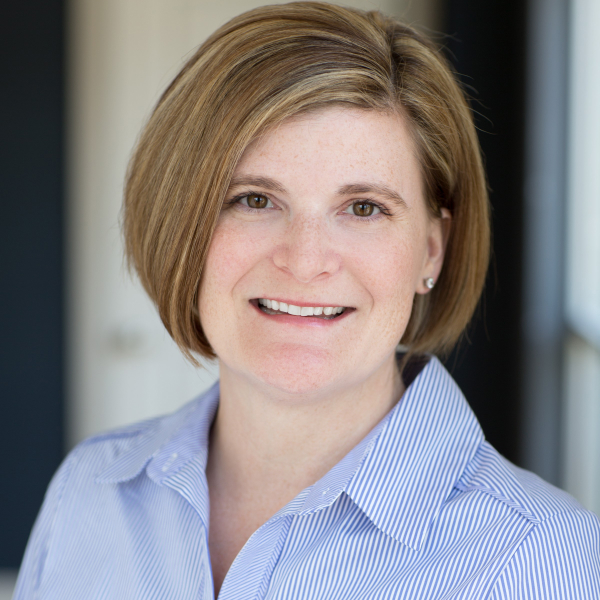
Matt Fanelli
Chief Revenue Officer at Digital Remedy

“We know marketing takes multiple touchpoints now. It's not just one thing.”
Matt Fanelli
You picked your channels, launched a campaign and tracked performance in a fairly linear way. Today? Consumers are bouncing between social, search, streaming, AI tools, connected devices and more—all before making a decision. In this episode, Matthew Fanelli joins Tessa Burg to unpack what’s actually broken in marketing measurement and how leaders can rethink performance in a fragmented world.
“The whole mentality of ‘just set it and forget it’ is part of the breakage.”
Matt breaks down why platform-led measurement often misses the mark, how attribution gets messy when multiple touchpoints influence a purchase and why defining “what success really looks like” is the first step most marketers skip. The conversation explores real-world examples—from healthcare to retail—and explains how better attribution, smarter use of AI and stronger human oversight can help teams build trust in their numbers again.
Highlights:
- Media fragmentation and its impact on measurement
- The “trifecta” of modern consumer behavior
- What’s broken in platform-led measurement
- Attribution modeling in a multi-touch world
- Last-click bias and search getting too much credit
- Cross-channel performance tracking and omnichannel measurement
- AI’s role in optimization and its limitations
- Platform bias and engagement vs. true performance
- Why quality and transparency matter more than reach
Watch the Live Recording
[00:00:00] Tessa Burg: Hello, and welcome to another episode of Leader Generation, brought to you by Mod Op. I’m your host, Tessa Burg, and today I am very excited to welcome Matt Fanelli. He’s the Chief Revenue Officer at Digital Remedy, and we’re going to jump into a, a topic that keeps coming up as we as marketers are trying to figure out what are the new metrics.
[00:00:21] Tessa Burg: That we need to be judged against, that we need to judge our creative and our campaigns against and how well we’re reaching our customers. And that is media fragmentation. It doesn’t just make buying more complex. It feels like it’s completely broken how we judge performance altogether. Matt, thanks so much for joining us for this conversation.
[00:00:41] Tessa Burg: We’re excited to have you.
[00:00:42] Matt Fanelli: Thanks so much for having me today, Tess. I appreciate it. I’m excited to have this conversation with you.
[00:00:47] Tessa Burg: Let’s start by learning a little bit more about you and Digital Remedy and your role there today.
[00:00:53] Matt Fanelli: Absolutely. So first and foremost, I am a proud father of five children.
[00:00:58] Matt Fanelli: I’ve got three boys and two girls. Uh, I’ve got three dogs and I have a very, very full house. And why is that important? We are the uber consumers here in the Fanelli household. Things are showing up every single day. A lot of stuff we actually don’t even really need, but for some reason we keep buying it.
[00:01:20] Matt Fanelli: Um, I’ve actually been at Digital Remedy now for a little over six months in the capacity of Chief Revenue Officer. So all of sales and marketing is somewhat under my purview here as an organization, and I have been in the digital space for well over 20 years at this point. And one of the reasons why I joined Digital Remedy is specific to the conversation that we’re gonna be having today in proving efficiencies and bringing some ease to agencies and clients throughout the country.
[00:01:52] Tessa Burg: Yeah. And a lot is changing with agencies and how they service their clients and clients and how they look at where do they need to be investing to really make the most of the moments that they can get in front of their consumers or their buyers. ’cause how we find and discover products is even changing.
[00:02:12] Tessa Burg: And you’ve said that platform-led measurement is why optimization, we’re trying to make this better, keeps missing the mark. When you look at that, when you look what is fundamentally broken and how performance is defined today.
[00:02:27] Matt Fanelli: Mm-hmm. I think there’s, there’s a couple of things Tessa, and if I could just very quickly take that, you know, to something you just mentioned, maybe even a little bit further, further upstream, when we think about the consumers and how we’re making decisions on purchasing products and services and interacting with different things.
[00:02:43] Matt Fanelli: You know, and I, I really like to define it almost as from the consumer mindset. It’s a trifecta of things that are happening as adults, human beings. Our kids, our attention spans are at an all time low. You know, some of the research that I read actually says, you know, the attention span of an adult in the United States now is less than a goldfish.
[00:03:05] Matt Fanelli: What’s the shiny object? Where’s kind of the, you know, the next rabbit in a box? You’ve got low attention spans, you’ve got more choices than we’ve ever had as consumers between, you know, anything that’s cereal, uh, car insurance, you name it. More choices than ever before. And the number of connected devices that we interact with every single day as technology continues to grow, is grown exponentially from your laptop, to your iPad, to your, you know, your iPhone, if you have one of those to thermostats in your house, right?
[00:03:42] Matt Fanelli: All of these things are connected. So this trifecta in decision making is, we know consumers have low attention spans. They have more choices than ever before, and they have, from a technological standpoint, more devices. As a marketer, how do you break through to get that right message in front of the right person at the right moment in time to complete a predetermined desired action. And Tessa, I say predetermined, desired action very deliberately as we’re talking today, because success and performance is in the eye of the beholder. I always like to start every conversation with, what does success look like for you? Is it building a brand in the marketplace?
[00:04:29] Matt Fanelli: Is it getting an appointment scheduled? Is it signing up for some type of a subscription? What does that look like? And frankly, I think that part is broken. I think oftentimes we go into things without clearly defining what success looks like. When you define what success looks like, then you have other things that can all layer in and dovetail to make sure that you’re setting yourself up to achieve that goal versus saying, I wanna run a campaign and I wanna reach.
[00:05:05] Matt Fanelli: Soccer moms in Ohio. Well, that’s great. You, you’re reaching them. What do you want them to do? What do you want them to do? And from my perspective, the understanding of that really helps to formulate what is the type of media plan that needs to be put together? What’s the type of technology that needs to be instituted?
[00:05:28] Matt Fanelli: What type of data should we be looking at to make sure from that inception. We’re achieving and constantly optimizing towards that goal. I think that’s the first part that is broken in a lot of cases, is understanding what does success look like for me? And is that achievable? Is it realistic? And partnering with someone who’s willing to have a courageous conversation around that, on what is realistic and what does success look like.
[00:06:00] Matt Fanelli: So when you think of. The fragmented con consumer mindset, right? The trifecta of things. Now you’re determining, okay, this is what is success for my business, right? For my brand. Now you build out your media plan. The third part of that challenge then becomes, okay, great. How are you measuring that? How are you measuring that?
[00:06:24] Matt Fanelli: And that’s where we come in at Digital Remedy. All of our technology is steeped and developed very specifically with having success and performance in mind, knowing that there’s wide variations of that. That that is gonna change over the course of a campaign. You constantly need to be optimizing, but through our dashboards, you then have the ability to look and monitor and make some very smart decisions somewhat in real time that will correlate to that original success metric.
[00:06:57] Matt Fanelli: That part of it, frankly. I think is broken. Those are the three parts, is understanding, no two consumers are exactly alike. You’ve gotta break through. Now you break through. What does success look like against that group and for your business? And then three, how are you measuring that and what does success look like and how can you actually prove that?
[00:07:23] Matt Fanelli: The proof Tessa, I would say to you is, is somewhat all over the place. Doing that in a transparent fashion I think is super important. Not just, Hey, we drove X amount of people to your site, or we had X amount of form fills. It’s, where did those happen? What time did they happen? Are we sure it was against our predetermined audience?
[00:07:49] Matt Fanelli: How can we actually prove that case back? So I think that’s something else very, very deliberately that marketers, agencies, clients, really need to monitor and take a look at because those things are challenging and sometimes they’re in conflict with one another.
[00:08:06] Tessa Burg: And that is really the in conflict piece, I think is where a lot of marketers sort to start to lose trust in the numbers.
[00:08:16] Tessa Burg: Because if I’m running a cross channel campaign, ’cause I wanna hit my specific audience wherever they’re at in that right moment. I might be on social media, I might be on CTTV, I might be trying to optimize my content for an LLM like my. Purchase journey right now as a soccer mom in Ohio is I learned about a lot of new products on Instagram.
[00:08:40] Tessa Burg: ’cause I know my phone is always listening and whatever I was talking about on the sideline of the soccer game pops up literally that night as an ad. And of course I have ChatGPT, and I’m voicing in like, Hey, I just saw this. Give me six other products that are like that. And then I do a combination of other types of research.
[00:08:59] Tessa Burg: I think that’s a very normal path. In between that I’m consuming all this other media. As a marketer and as someone who looks at a lot of data, there’s overlap, right? So every platform where I just saw those messages is taking credit or saying I did something on their platform. How do you work through that?
[00:09:22] Tessa Burg: Like how do you build trust in the numbers that when someone wants to scrutinize, like. Hey, I gave you this much money. Tell me where am I getting the most? ROI You break that apart and help marketers trust the numbers and the performance they’re seeing.
[00:09:41] Matt Fanelli: That’s a great point. And what you just described I think is the path that frankly, the most amount of people that I talk to take right now, it’s maybe I started ’cause I was exposed to something in a social media platform, then maybe I went and searched it.
[00:09:58] Matt Fanelli: Then all of a sudden maybe I was exposed to a CCTV ad and then I go back into search and I buy the product. I think. Going back to that trifecta from the consumer mindset is. Back in the day, there was a very, I would call it almost a linear path. It was you were exposed to kinda one thing and you did an action because we have so much access and it’s happening in real time.
[00:10:23] Matt Fanelli: You know, I would argue to say that’s where a lot of the attribution modeling that we hear about really comes into play because. We know it takes multiple touchpoints now. It’s not just one thing.
[00:10:37] Tessa Burg: Mm-hmm.
[00:10:38] Matt Fanelli: We’re not exposed to just one thing in most cases and take action on it. And frankly, I think this was the whole, you know, uh, kind of divergent path of, let’s say search as a, as a platform where search was getting all the credit for everything because it was kind of that last click.
[00:10:57] Tessa Burg: Yeah.
[00:10:57] Matt Fanelli: Maybe as a consumer I was exposed in five other places, but right now I’m ready to do it and I go into Google if that’s my engine, right, and I go in and I actually purchase it right there. The way to attribute for that, and I think the way to accommodate for that to put people’s mind at ease is to have this type of a conversation to say, look.
[00:11:18] Matt Fanelli: It generally is multiple touchpoints, and if you do a multitude of things with one company in one platform, you can now see where all of those touchpoints happen and why they make sense. That’s part of the reason why I joined Digital Remedy is we have solutions for that. So we’re not operating in a silo.
[00:11:40] Matt Fanelli: We’re not operating in the last thing that happened or the first thing that happened, but we’re looking omnichannel to say, what are all of the different things here that were on this plan, that move that needle? The additional item to that, that I would say, which is very dependent on the business, is what data are they seeing?
[00:12:03] Matt Fanelli: I go way back upstream again to what does performance look like? Well, if performance is selling, you know, a dip in a supermarket and you only have distribution in these five supermarkets, how are we getting that closed loop of sales that occurred against that SKU? All the way through to see what did this do to move that product in store.
[00:12:27] Matt Fanelli: Now, that’s one example, but you know, you can think about that. Everything from banking and finance opening up new checking accounts, 529s. What’s that loop? You can think about it for automotive, how many cars were sold, how many test drives were scheduled. But going back to that question, tes, it really is a matter of figuring out how do I get all of this in one place?
[00:12:51] Matt Fanelli: And attribute different kind of values to each of those touch points. Knowing the trifecta, the consumer mindset, we’re not looking at one thing and going for it specifically on the larger purchase items. Insurance, right is a great example of that. People shop insurance, you know, kind of left and right.
[00:13:15] Tessa Burg: Mm-hmm.
[00:13:17] Matt Fanelli: What are the touch points that actually get them to pick up that phone or actually fill out a form to get an exact quote back. Those are all the pieces I think that we need to look at and look at very meticulously.
[00:13:29] Tessa Burg: And in the results that you’re seeing from that attribution. You mentioned earlier that marketers and messages really need to break through.
[00:13:40] Tessa Burg: What kinds of insights can marketers glean from that attribution and better understanding of the path that helps them create content and create moments within that fragmented media to fuel those breakthroughs or to keep people moving towards, uh, the purchase?
[00:14:00] Matt Fanelli: Mm-hmm. I think there’s, there’s a few things there.
[00:14:04] Matt Fanelli: And again, it depends on the type of business, but I think I have seen examples of. Clients that we’ve worked with and they think, this is my audience, I’ll actually use healthcare as a really quick example. And, you know, one of our clients was a very large healthcare system, um, that was trying to promote specific lines within the healthcare system.
[00:14:26] Matt Fanelli: Things like men’s health, bariatric surgery, et cetera. And specific to kind of the men’s health campaign, their target audience at the onset of that campaign was targeting men. And it was targeting men of a certain age, et cetera. And what we started to find out, because you’re dealing with a client, they’re like, listen, we know our audience better than anybody else.
[00:14:49] Matt Fanelli: And obviously clients generally know their, their best audience better than anyone else, and their end patient obviously was a male. It was men’s health. Well, we very quickly figured out through the intake process of that and getting that messaging out. They were targeting the complete wrong audience. It was the significant others of their best patient that they really needed to influence versus going to the men directly in that particular scenario.
[00:15:21] Matt Fanelli: That to me was kind of one learning, right? Kind of healthcare. The second learning is. When people have things in abandoned carts, how do you now give them a special offer for something where it’s, you know, they were in there, it’s E-comm retail, and it’s like, hmm, they were really gonna buy that pair of boots, and then all of a sudden they abandoned that.
[00:15:43] Matt Fanelli: Now giving them some messaging through perhaps like some dynamic creative that says, Hey, one time only $20 off, just as an example, does that get them to purchase those boots and now what is the lifetime value? Of that customer. That’s one of the ways I think, you know, in those two examples, that you move people down the path to get them closer to whatever that predetermined metric for success was.
[00:16:10] Matt Fanelli: And that’s something that I’m seeing, frankly, AI is helping with that tremendously in terms of doing it faster, doing it more precise. The one thing that I would say is there is, and I’m curious to, you know, kind of unpack this myself, in every AI platform that everyone uses, what are some of the inherent biases that are ultimately built into those platforms that change some of the kind of output or decision making process?
[00:16:40] Matt Fanelli: And then secondarily, which, who knows what the future holds, but at what point through those platforms are those going to be more of a. Paid marketing platform, meaning you put in, Hey, what are the top five things for, fill in the blank. And all of a sudden somebody who’s paying for one of those happens to come to the top.
[00:17:06] Matt Fanelli: You know, these are, these are things that I think we’re seeing a little bit of and everyone is kind of monitoring and, and keeping a pulse on.
[00:17:14] Tessa Burg: Yeah, I agree for sure. On the bias. I feel like in every foundational model, you can almost tell which sources they give more credit to over others, and we’re working with clients right now to figure out how do I optimize my content to get more visibility within LLMs.
[00:17:34] Tessa Burg: But even in the paid versions that exist that are AI optimized today within Google, like, uh, their performance marketing tools and Meta has really strong performance marketing tools, you can, you can see where those biases lie. And it is so important to look at the end results, understand the audience, and tie those audiences back to the metrics of of success.
[00:18:00] Tessa Burg: So that you can make the changes, but if you just let it run it, you, you’ll spend money very quickly and you have to have that visibility across that journey to understand is are you getting the alignment back to your end conversion goal? Or if it’s not end conversion, uh, brand impact, or are you getting a lot of engagement, but that’s not resulting in a sale you’re just getting all the platforms are gonna optimize towards the engagement ’cause that’s what, that’s what they want. Anybody want you to stay in their platform, they want to serve up content they know you’re gonna interact with and be interested in. And it’s interesting that it’s not always, that’s not always good for the brand or good for the advertiser that’s paying for it.
[00:18:44] Matt Fanelli: Tessa, you know, it’s, it, it’s interesting to hear you say that because I also feel like when you look across all of these different platforms and you know, some of the in inherent biases that can be built into them, you know, and the whole conversation just generally around AI and it’s replacing people, you know, the robots are, are completely taking over.
[00:19:03] Matt Fanelli: You know, really what you’re talking about, and I couldn’t agree more is while I think there is. Use cases and there’s an opportunity. It’s a building block. For a person that has critical thinking to measure these things back to performance, to make tweaks based on the foundation of perhaps what one of these, you know, kind of generated platforms is gonna provide to them.
[00:19:27] Matt Fanelli: It’s not just. Let it run. I think, you know, that’s one of the misperceptions. It’s just put it in and let it run. It does its algorithm, you know, it’s, it’s AI and you’re off to the races and you’re good to go. There needs to be that oversight and that implementation and that optimization, because that engagement is all about just creating a stickier environment to keep them there, and that may be in direct conflict.
[00:19:52] Matt Fanelli: With what the metric for success for that particular marketer actually was. So I think taking that step back and just looking at it and having a really smart team of people look at some of that foundation and that baseline, I think is gonna be something that we’re gonna start to. Really figure out the importance of every webinar that I listen to and everything that we’re reading again, is about AI just taking over and, you know, frankly, taking over complete industries where you’re not gonna need people anymore.
[00:20:24] Matt Fanelli: And I, I just don’t see that.
[00:20:28] Tessa Burg: Yeah. And it’s. I’ve heard the same webinars. We’ve had so many conversations on this podcast about AI and what it’s replacing, and there’s no doubt it’s replacing specific tasks that that took too long.
[00:20:42] Matt Fanelli: Mm-hmm.
[00:20:43] Tessa Burg: Like putting together a cross channel media plan took too long, pulling together persona data based off of market research.
[00:20:49] Tessa Burg: Yeah. Takes too long.
[00:20:50] Matt Fanelli: Mm-hmm.
[00:20:51] Tessa Burg: Are some very good solutions and that. You can build to speed that up. But where you still need that human in the loop, humans are gonna go from the folks that execute and gather to the folks that analyze, ask why, and direct.
[00:21:08] Matt Fanelli: Mm-hmm.
[00:21:09] Tessa Burg: And the more when you can automate and speed up some of those, I don’t wanna say menial tasks, they’re critical, important tasks.
[00:21:17] Tessa Burg: We all have to know who our audience is. But do you need to take three months anymore? No, but if you keep asking why on the output, it’s going to unlock different ways to connect, it’s gonna unlock more opportunities. And then you also have to lean into, now that you can go across multiple channels. I do think too many marketers in the past have said, well, we’ve tried that channel didn’t work, that channel didn’t do what we needed to.
[00:21:46] Tessa Burg: Where now since AI optimization is so strong, and if you don’t overcommit to too few channels, and if you, you get brave and you follow your audience where they’re at, and have a tool that can look across, you need to test and retest where that’s at. And you need to keep asking why, because like you said, who you think you’re talking to is not always a decision maker.
[00:22:11] Tessa Burg: And we gave an example based on gender. A lot of times it’s based on like the. Behaviors that go across many different types of peoples and geos, but none of them
[00:22:20] Matt Fanelli: exactly on
[00:22:21] Tessa Burg: the surface, unless you’re looking across the entire landscape.
[00:22:24] Matt Fanelli: It’s exactly right and I, I think, you know, just to that point, even when you think you have the right audience and you may actually have them, the behavior patterns of that audience also changes over time and what gets them to engage and what gets them to purchase, perhaps, you know, based on what your goals are, that also changes.
[00:22:44] Matt Fanelli: So the whole mentality of just set it and forget it, you know, to me that’s part of the breakage, the breakages. Not recognizing we’re all multitaskers, we have low attention spans. We’re all going crazy. We’ve got a ton of devices. We need to get them in front of us, right? And as they’re in front of us, it’s like, oh, I’m on the computer screen and now this thing is going off, or that’s going off.
[00:23:06] Matt Fanelli: And then on top of that, what does success look like? And just when you have that all figured out, all of a sudden the people that you’re in front of, it’s like, oh, they just changed and they’re doing something different. So looking at that in a. In, in a cycle of information. It’s never just set it and forget it and, and let it run.
[00:23:25] Matt Fanelli: Because even when you have everything precise, what makes those people tick or that group or that audience kind of interact, or whatever the case may be, it changes and it changes so frequently that you constantly need to be looking at all of this information. And I think that’s where, uh, you need really smart people to help guide that conversation.
[00:23:47] Matt Fanelli: For sure.
[00:23:49] Tessa Burg: Yes, I agree. So for all listeners who are good, creative, strategic thinkers, have no fear, you’re gonna continue to have a job. And the best part is with more data, more fuel for that creativity and more ways to connect with your audience. So if fragmentation isn’t going away, and we have covered so much in this conversation for marketing leaders listening to this, what else should they be thinking about?
[00:24:17] Tessa Burg: In 2026 and beyond, um, as it relates to media and connecting with their audience and driving those business outcomes.
[00:24:25] Matt Fanelli: I would say in addition to understanding the consumer mindset and the trifecta and defining what does success look like for you, I would also say one of the key areas to really look at and focus on is quality.
[00:24:40] Matt Fanelli: There’s something about the quality of the environments that you’re in that I think definitely resonates with people specifically when you’re talking about behavior. Look at the quality, look at the transparency, look at all of those data points. What’s the time? Is there day parts? All of those things that may seem not important, actually could be the most important things for the success of your campaign.
[00:25:07] Matt Fanelli: So again, in addition to the things that we discussed in 26 and beyond, look at the quality of where you are and the transparency of that, because the importance cannot be highlighted enough.
[00:25:20] Tessa Burg: I think that is a great place to end. I feel like for marketers who are at businesses that haven’t made that change to quality, 2026 is the year you must make it because there are too many options.
[00:25:34] Tessa Burg: And if you are not smart about how you connect, then it will be very hard to stand behind your performance numbers at the end of the day in front of your leadership team. And it is always surprising to me. When we hear marketers still talk about reach and volume and blasting and send to everyone, and we now have the tools to just be smarter and plus, it’s just better for your brand.
[00:26:02] Tessa Burg: Not to be spamming everywhere, but be there in the moment when you’re gonna add that value. So Matt, thank you so much for being our guest today. If listeners have additional questions, how can they reach you?
[00:26:15] Matt Fanelli: Please reach out to me. Uh, my email address is [email protected]. We’d love to hear from you guys and always happy to answer any questions.
[00:26:23] Matt Fanelli: And Tessa, thank you so much for having me today. This was, uh, time well spent and a lot of fun. I appreciate it.
[00:26:29] Tessa Burg: Yeah, I agree. I really appreciate you being here. And for listeners who want more Leader Generation episodes, you can find them at our website, mod op.com/podcast or anywhere that you listen to podcasts, just search Leader generation, and Matt will definitely connect again.
[00:26:46] Tessa Burg: And until next time, have a great rest of the week.
[00:26:48] Matt Fanelli: Thanks so much. You as well. Bye now.
[00:26:50] Tessa Burg: Bye.
Matt Fanelli
Chief Revenue Officer at Digital Remedy
Matthew Fanelli is Chief Revenue Officer at Digital Remedy, where he leads commercial strategy, revenue operations, and go-to-market execution as the company scales its performance-driven media platform. With more than 20 years of experience in digital advertising, Matt brings deep expertise across programmatic media, data strategy, and performance marketing. Prior to Digital Remedy, he served as SVP of Sales at Media Now Interactive, leading data-driven revenue initiatives. Matt focuses on helping brands and agencies drive measurable outcomes through unified, cross-channel performance intelligence.
More
Episodes


Beauty & The Data Beast: Consumer Obsession Meets AI

Mid-Market Growth With Scalable Data & AI Strategy