
How To Evolve From Boss To Leader
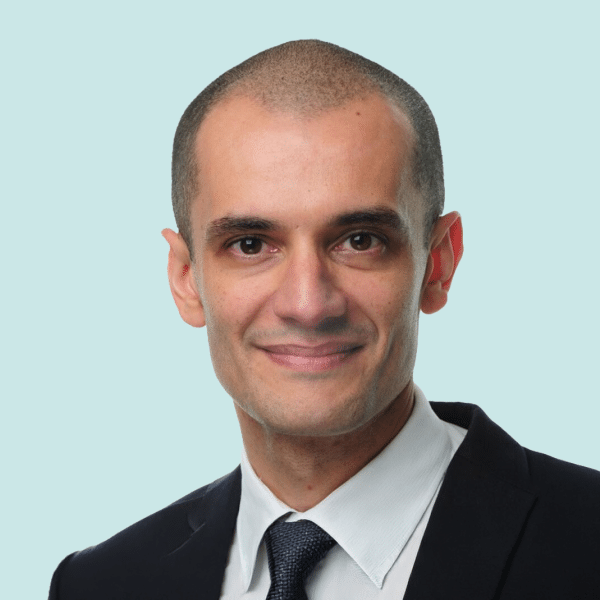
Rishad Tobaccowala
Author, Advisor, Leader

“For every dollar a company puts in technology, they should be putting $2 into talent.”
Rishad Tobaccowala
AI is changing everything, but not in the way most leaders think. In this episode, Rishad Tobaccowala breaks down how we got here, from the early days of broadcast marketing to today’s fast-moving, AI-powered world. He explains why the current moment is different, what’s actually changing and what still matters more than ever.
“It’s not having an AI strategy; it’s about rethinking your entire organization.”
If you’ve been hearing about AI strategy and wondering where to start, this conversation will shift your perspective. Rishad makes the case that focusing on AI alone is a trap and instead challenges leaders to rethink their entire organization, their role and how they create value. He also shares a powerful framework for moving from control to inspiration and why imagination is becoming one of the most important leadership skills.
Highlights:
- The three phases of marketing transformation
- How AI is accelerating the speed of change
- The idea that knowledge is becoming free
- Why AI strategy is the wrong question
- The difference between bosses and leaders
- Moving from control to inspiration and influence
- Rethinking efficiency vs. innovation and growth
- Thinking like an outsider and underdog
- The future of talent: upskilling, fractional work and AI agents
- Why traditional workplace models are breaking down
- How leaders can unlock imagination and adaptability
Watch the Live Recording
[00:00:00] Tessa Burg: Hello, and welcome to another episode of Leader Generation, brought to you by Mod Op. I’m your host, Tessa Burg. If you’re working in marketing and you haven’t encountered Rishad Tobaccowala, you’re about to understand why 30,000 leaders start their week by reading his newsletter. Rishad spent four decades at Publicis Group rising to Global Chief Strategist and Chief Growth Officer of one of the world’s largest marketing firms. He’s a two-time HarperCollins author, an advertising Hall of Famer, and one of the most sought-after advisors in business, working with companies across private equity, venture capital, and the Fortune 500. He was named Marketing Innovator By Time, a Top Business Leader by Business Week, and a pioneer in digital marketing long before the rest of the industry even caught up.
[00:00:49] Tessa Burg: He’s the author of Rethinking Work, the host of the Rethinking Work podcast, and I just learned before we got on now the host of the Embossing podcast on iHeart Media. Please welcome Rishad Tobaccowala. So happy to have you. Thanks for joining us.
[00:01:05] Rishad Tobaccowala: Tessa thank you for that great introduction, uh, privilege to be on this show.
[00:01:10] Rishad Tobaccowala: Uh, speaking with your fine audience, which I know includes a lot of your clients too, as well as your talent.
[00:01:18] Tessa Burg: Yes, and I, I wanted to make sure I read the opening, which I don’t usually do because you’ve had such an incredible career and this is such an important episode for marketing leaders, and as you just said, that’s the majority of our audience.
[00:01:34] Tessa Burg: You’ve had that front row seat to every major marketing disruption over the last four years. Tell us a little bit, what have you learned in that journey and what is different now with AI?
[00:01:45] Rishad Tobaccowala: Sure. So. We’ve gone through three phases of transformation in the world of marketing since I’ve been in it. So, I started in 1982 and between 1982 and 1993, which I will call phase zero, it was basically marketing as we know it, dominated by broadcast media, uh, limited number of channels and choices, probably four major networks in the United States.
[00:02:19] Rishad Tobaccowala: Uh, four or five dominant media companies in the magazine space. Um. And most communication was one way and, um, life was good. I guess. Uh, in 1993, we entered the first connected age. So if you think about phase zero, then we entered first connected age with the advent of the internet. Now obviously things like AOL and Prodigy and CompuServe had been around, but it was 1993 that human beings learned on how to connect to transact and connect to discover. We call that search and e-commerce, which is known as Google and Amazon. And between 1993 and 2007, you began to see significant shifts happening in the marketing landscape.
[00:03:13] Rishad Tobaccowala: Um. In 2007, we entered the second connected age where in addition to connecting to discover and connected to transact human beings, were now connecting all the time connecting to everybody and connecting to distraction.
[00:03:27] Rishad Tobaccowala: And we call that mobile, social and streaming. Which also known as Netflix, Meta, and Apple. So we now have this world where we have Meta Apple, Google, Netflix, Amazon, and companies like that that dominate the space. And all our human connections companies that we call technology companies. And in that advent, we went from digital basically being something I would beg marketers to put money into.
[00:03:59] Tessa Burg: Mm-hmm.
[00:03:59] Rishad Tobaccowala: To today, most marketers put between 70 to 80% of all their marketing in digital media. So those are the big shifts. Um, what, so what has really changed is, uh, fragmentation of channels. A move from one-way communication to two-way communication. A move from corporations as media companies, to also individuals as media companies.
[00:04:27] Rishad Tobaccowala: You know, you mentioned my Substack. I reach probably as many CEOs and CMOs that Ad Age does, but I write by myself. Now, obviously they’ve got much more, including they write all the time and I write once a week. But it gives you sort of an idea as to what might be a media company in the future.
[00:04:46] Rishad Tobaccowala: Now we’ve entered to the third connected age, so building on what’s gone before. And by the way, the other thing that changed is people, which is you and I, customers, consumers, human beings, got more and more power. Because we had voice, we had agency, we had choices. And what did not change is the importance of marketing, because marketing is about understanding and meeting customer requirements.
[00:05:07] Rishad Tobaccowala: And marketing grew more important because in effect, customers grew more powerful. So marketing grew more important, brands grew more important, but the way brands were built or marketing got done. Became more expansive than it was before. But one of the things that did not change was the importance of understanding people and insights.
[00:05:30] Rishad Tobaccowala: The ability to tell stories across different media, whether we call it creativity or whatever. Right. And obviously what grew more important, but was always important is how can we make sure. We can find, evaluate, and measure and better find our audiences and measure how our campaigns did. So all of those remain the same.
[00:05:50] Rishad Tobaccowala: To your point, we’ve now entered the third connected age, which is building on the first two, not replacing it. And in there, one of the big things is data, is connecting to data, which is what I call AI. And in some ways it’s building on what’s gone before. There’s a newer pallet of tools with generative AI.
[00:06:10] Rishad Tobaccowala: There’s a new way to interact with people where we’ve gone from search engines to answer engines. We basically have new ways of connecting, which is augmented reality, voice, virtual reality. But in effect, the big thing that AI is doing is it’s making three shifts that have not happened before. So a lot of stuff has remained the same and continues to grow, but there are three new things which I’ve not seen before.
[00:06:43] Rishad Tobaccowala: The first one is the speed of rate of change is much faster than I’ve ever seen. So Moore’s Law was we would double processing power every 18 months. It took me, it took 15 years to 16 years between 1993 and maybe 2020 for digital media to overtake analog media.
[00:07:08] Tessa Burg: Yeah.
[00:07:09] Rishad Tobaccowala: AI is doubling in its capacity every seven weeks. Not every 18 months, right? The rate of uptake of things like ChatGPT is in a more exponential curve than ever before. So the organizations don’t have time now to say we will wait. In fact, organizations and government are way behind how fast the technology is changing, so that’s one big shift.
[00:07:38] Rishad Tobaccowala: The second big shift, which is both an opportunity but potentially a risk for all of us who work in marketing services, which include, by the way, our clients, which are marketers. Which is that for the first time, knowledge has become free. So as white collar workers, one of the things we do is we manipulate, move around, create, produce, and distribute knowledge. That’s gonna be free.
[00:08:07] Tessa Burg: Mm-hmm.
[00:08:08] Rishad Tobaccowala: So it’s gonna make us have to figure out what we do. Obviously knowledge is not the same as insights and ideas and wisdom, but a lot of our business was about knowledge and a lot of our business was about charging people, FTEs to get things done.
[00:08:24] Rishad Tobaccowala: Clients are not gonna pay so much for those people. To get those things done. So there’s some challenges to the business model of both clients and agencies in this new space, right? So there’s this knowledge is free business model. I mean, knowledge is free, therefore business model challenges much faster speed. Therefore organizational challenges.
[00:08:48] Rishad Tobaccowala: Uh, and the third I think, very big shift is I think for the first time the human brain. Is not being expanded, but maybe replaced. And we are now dealing not with artificial intelligence, but we’re dealing with alien intelligence. I know these things are not alive, okay?
[00:09:11] Rishad Tobaccowala: But try to tell 40% of America who has fallen in love with their AIs. So those are different media that is alive, media that disrupts our business, media that moves, and it’s not even media, it’s technology that moves much faster than our organizations are. The big differences between what’s come before, so a lot of what’s important, which is the importance of humanity, the importance of ideas, the importance of measurement, all those remain. But now you have this scrambled egg. That we are having to deal with.
[00:09:48] Tessa Burg: I know a lot of people, when they think about the impact of AI, what they’re trying to do is just keep up. And we see study after study come out and say, well, they’re not keeping up. And companies are launching pilots with AI and they’re failing.
[00:10:08] Tessa Burg: They’re getting stuck with adoption. So people know or fear that they might be replaced, but they don’t exactly know what skills to build. And something that you have said that I think is really interesting is creating an AI strategy is actually the wrong question. And a lot of people keep going back to that. They’re like, well, we don’t have a solid enough AI strategy.
[00:10:32] Tessa Burg: Can you make the case as to why that might actually be a trap?
[00:10:37] Rishad Tobaccowala: Yes. So I believe that AI is bigger than mobile phones, the internet and printing presses, and it is far bigger than advertising and marketing. It’s basically, it’s gonna change the future of medicine and agriculture and a whole bunch of other things.
[00:10:59] Rishad Tobaccowala: So let’s assume that AI is more than electricity, but it’s like electricity. So just think about the fact that if you go around and say, my company is better than your company because of my AI strategy. It’s like telling somebody your agency is better than another agency because of your use of electricity.
[00:11:23] Tessa Burg: Right.
[00:11:25] Rishad Tobaccowala: You don’t go around saying, here’s my electricity strategy. Everybody’s got electricity.
[00:11:32] Tessa Burg: Mm-hmm.
[00:11:32] Rishad Tobaccowala: Right. And AI, I think, makes you actually have to rethink the strategy of your firm, your organization, and what you do. So it’s not having an AI strategy, it is about rethinking your entire organization.
[00:11:49] Rishad Tobaccowala: And instead of thinking, so that’s what most people are doing and they, they’re, they’re completely wasting their time with AI strategies. So that’s the reason why I think doesn’t make sense. ’cause you don’t have an electricity strategy. AI itself is even not gonna be a differentiator. All the AI that every company has comes from the same seven LLM companies.
[00:12:09] Tessa Burg: Yep.
[00:12:10] Rishad Tobaccowala: Okay. Who right now are subsidizing it very much like Uber was subsidized in the early days. Okay. And so a lot of companies are creating different versions and, you know, maybe the big differentiator in the future, uh, as lik says, may not be the LLMs, but will be two things. It’ll be the interfaces and what every organization brings to the LLM.
[00:12:32] Rishad Tobaccowala: So sort of the AI plus the HI, where the HI is not human intelligence, but it’s human intuition, human interfaces, human interaction, human imagination. And that’s the, the other thing that I think management in many companies, and I used to be management, so I’m all for management, but management in many companies are struggling with is they’re actually struggling with their own personal relevance and blaming it on technology.
[00:13:02] Rishad Tobaccowala: The world has changed. It’s one of the reasons why, you know, this new podcast I’ve launched called Unboxing is we’ve entered an age of debossification and nobody told the bosses that. Okay. And so bosses spend a lot of time overseeing, checking in, allocating, delegating, monitoring. All of that is done by machines.
[00:13:23] Rishad Tobaccowala: So you take a senior person, give them a drink, and they say, I may not understand AI. I may not understand the multiple generations at work. I may not understand how to manage distributed workforces, but instead of saying it’s about me, I’m gonna basically write an AI strategy.
[00:13:42] Tessa Burg: Yeah, I would say it’s a very bad era to be a boss, especially when you’re used to operating that way and you’ve become comfortable with a certain level of control. Like whenever I see leaders be looking resistant, it’s actually not, they’re not actually scared of the AI. They’ve never been scared of things that they can’t do because they’ve taken a lot of ownership in what they can control and having that control and being able to lead and manage. But what seems to be holding them back from making the transition, which I think all leaders have to make from being a boss to being an innovator. And you said a word that really resonated with me and it’s imagination.
[00:14:28] Rishad Tobaccowala: Yes.
[00:14:29] Tessa Burg: You have to be able to elevate out to being imaginative. But what, there are some leaders I’m seeing they’re not getting there because there’s no control. You gotta get comfortable being uncomfortable that you’re not gonna be able to control. But once you let go of that fear of loss of control, that unlocks that imagination.
[00:14:51] Tessa Burg: Um, and that is where that human ingenuity can really be valuable. How? How can people make that transition? Or how do you help people better understand what it’s gonna take to get out of being the boss and really leaning into the value of human ingenuity.
[00:15:13] Rishad Tobaccowala: So I think, you know, one of the big things to think about is that think of yourself as a leader versus being a boss.
[00:15:24] Rishad Tobaccowala: And the difference between a leader and a boss is bosses think about zone of control. And leaders think of zone of inspiration.
[00:15:33] Tessa Burg: Mm.
[00:15:33] Rishad Tobaccowala: Okay. Or zone of influence. What’s my zone of influence versus my zone of control? And while bosses do this monitoring, allocating, delegating, measuring, and checking in.
[00:15:47] Rishad Tobaccowala: Leaders, build guide. Mentor, sell, create. So I ask every leader, look at your calendar last week. What percent of last week was spent doing the right hand side, which is build, create, sell, guide, mentor, and how much of your staff was checking in, monitoring, measuring? And if one of them. The left hand side is more than 50%.
[00:16:18] Rishad Tobaccowala: Be worried you have to do some of that, but that should be probably 30% of your job, 70% of your job should be what a leader does. Because that other 30% is gonna be done better by machines. Most of it.
[00:16:34] Tessa Burg: Yeah. I, I really like that framing and I feel like some people still get stuck and like, well, I can’t do this and I need to check in with all these folks.
[00:16:44] Tessa Burg: This could be a great opportunity to use cloud code and write an application that does it for you because, but there is already, you have to give some time and space to say, what are the things I’m gonna stop doing? And maybe even collaborate on how that stop turns into automated repetitive work. And it will free up that time to build and lead and inspire.
[00:17:08] Tessa Burg: But I think the other piece is even if I make that move. We still see a lot of boards and CEOs and saying we’re, look, we’re get, we need to drive efficiency. We need to cut costs. And sometimes that building piece and mentoring and guiding. You have to invest in it for it to scale. How do we make that business case or help people evolve from being so stuck in driving efficiency to allowing investment or to allowing innovation to take place to drive growth?
[00:17:43] Rishad Tobaccowala: So here’s the thing. Just like AI is not gonna be a differentiator, using AI for efficiency and effectiveness is necessary, but not sufficient to do anything. Because every company will have efficiency and effectiveness, so everybody cuts, everybody streamlines, everybody’s exactly at the same place.
[00:18:01] Rishad Tobaccowala: Now what? Right. And I think the real opportunities and threats from AI is not about efficiency and effectiveness, which you have to do, but it’s about existential opportunities and threats. So I’ll give you an idea, example, in the previous generation of digital change. Right. Most newspaper companies said we will use digital to more efficiently get subscribers.
[00:18:27] Rishad Tobaccowala: We’ll get our newspaper subscribers easily online. We will find ways to distribute information efficiently. We will find ways to reroute our trucks using digital algorithms. We will use, you know, digital portals to buy paper cheaper. They were being efficient and effective. The only problem was they were being more efficient and effective about being a newspaper company.
[00:18:57] Rishad Tobaccowala: The New York Times basically asked a different question, what if the future is not about newspapers and it’s about multimedia? What if the future is not about trucks and printing presses and it’s all digital, one of the future of newspapers? In addition, not to being about paper is not even about news.
[00:19:16] Rishad Tobaccowala: So today, with the exception in the United States of the Financial Times and the Wall Street Journal, which are business oriented papers, no newspaper is doing well, excepting the New York Times. And the New York Times had 2 million print subscribers. Now they have less than a million print subscribers.
[00:19:37] Rishad Tobaccowala: So you might say, oh my God, they went from 2 million to whatever, eight, 900,000, but their online subscribers are now 12.5 million. Their stock is at an all time high. Warren Buffet invested in them. 30% of their revenue comes from non-new sources, and they’re gonna crush CNN. While Bowery Vice is trying to figure out how to even reinvent CBS before she gets to CNN.
[00:20:02] Rishad Tobaccowala: The future CNN is the New York Times. That’s what people don’t realize. So all these businesses, it’s very much, you know, like every business, I say the opportunities and threats come from outside your category, especially in a time of AI. And one of the ways I tell management and leaders, and obviously you’re looking at me and this is not making a political statement, I said, everybody who’s moving.
[00:20:27] Rishad Tobaccowala: Today where all of us are immigrants, every one of us, even if you’re a Native American Indian, because we are all immigrating into an undiscovered country called the future.
[00:20:37] Tessa Burg: Mm-hmm.
[00:20:38] Rishad Tobaccowala: And in order to thrive in the future, we can learn from immigrants. So as immigrants navigate into undiscovered countries, how do immigrants succeed?
[00:20:47] Rishad Tobaccowala: A, they think like outsiders. The threats and opportunities for your business and your business model will come from outside your category. Just like GM and Ford were surprised by Uber and Tesla. Immigrants think like underdogs. AI technology allows small companies to fight with large companies. It’s the slingshot that allows David to bring down Goliath.
[00:21:10] Rishad Tobaccowala: So when somebody tells me they got a castle with a moat, I say, you got a castle. I got a source of water with which I’m gonna flood you out. And immigrants are willing to take short-term pain for long-term gain. In a world of change, if you are not investing in the future, get the hell out. You’re not management, you’re a useless Excel spreadsheet reader. That’s what I say.
[00:21:33] Tessa Burg: I love that competitiveness and just the spirit of that message.
[00:21:37] Rishad Tobaccowala: Right.
[00:21:38] Tessa Burg: Especially like thinking in terms of the underdog, being aware of threats that aren’t copycat.
[00:21:44] Rishad Tobaccowala: Yeah.
[00:21:44] Tessa Burg: You know, they’re, I think it’s very easy, whatever industry you’re in to keep looking at, well, what is the competitor doing? How are they doing this?
[00:21:52] Tessa Burg: Should we be doing that? Should we not? And that outsider view says. First, just look at, there’s a completely different way to deliver the value and the mission and vision that you have. And you have to not look at it within a lane, but maybe even go outside and just that imagination piece reimagine altogether.
[00:22:18] Tessa Burg: But then there’s this reality of, okay, but I have a, I have a marketing department, and you have lead firms. There’s like a hundred thousand people operating that as a company, if we are re-imagining how we’re creating the value and how we’re delivering the value to our customers. What should leaders be doing as they’re looking to restructure teams to be aligned with that new value creation/value delivery model.
[00:22:47] Rishad Tobaccowala: Sure. So I believe that every single company, for every dollar they put in technology should be putting $2 into talent upskilling and talent upgrade.
[00:22:58] Tessa Burg: Mm-hmm.
[00:22:59] Rishad Tobaccowala: Okay. So I believe that every company will go from year to tomorrow with three types of talent. They are going to go three new types of talent.
[00:23:10] Rishad Tobaccowala: One is their existing talent upgraded or new talent for new skills that they bring in human talent. That’s number one. So. The people in our company, I believe, are the most valuable resources. I truly, truly have been very loyal to my teams over the years, but what I simply say is we all gotta keep changing.
[00:23:32] Rishad Tobaccowala: We all gotta upgrade our mental operating system. Our phones have upgraded their mental operating system 18 times in the last 18 years. How many times have we, so we have to rescale, upskill. But at the same time, some of us may not be able to get the new skills that we completely need, so we have to buy them. Which is bring in new people.
[00:23:53] Tessa Burg: Mm-hmm.
[00:23:53] Rishad Tobaccowala: Right? So either by adding skills to the company or upskilling the company. Now there may be some people who basically say, we don’t want to do the new stuff, or we can’t do the new stuff, and then we have to very nicely find a way to part with them in the most human way possible. Okay. Because what you can’t do is you can’t take yesterday to tomorrow if they refuse to change.
[00:24:15] Rishad Tobaccowala: You gotta remember they brought us to today, so they’re valuable, but maybe not for tomorrow. So that’s the first group, which is take your talent, upgrade it, bring in new talent.
[00:24:24] Rishad Tobaccowala: The second is think of a new type of employee called a fractionalized employee. So companies today, especially in technology, are basically laying off 20, 30, 40% of their teams, either because to save money, to invest in technology, or they basically believe AI can replace them. That’s a terrible way to run a company. It is dispiriting, it’s demeaning. It is horrible.
[00:24:48] Tessa Burg: Yeah.
[00:24:48] Rishad Tobaccowala: If you actually gonna be more 20% more effective, what you might wanna do is you might wanna ask every employee if next year they wanna work 60, 80, or a hundred percent. You will find that many people are willing to work 80% as long as they get 80% of all their benefits, plus a hundred percent of healthcare, and they can do whatever they want with their time.
[00:25:07] Rishad Tobaccowala: Non-competitive, including some may want to learn, some may want to look after their aging parents, kids. You know, have a Etsy project on the side, et cetera. So think of new types of employees, which allow you to take your costs down in a humane way while attracting and retaining all the talent. So reimagine what talent is versus thinking about it being zeros and ones. There are new types of talent, so fractional.
[00:25:35] Rishad Tobaccowala: So one is upgrade your current talent, retraining, bringing in new people. Second is a new type of talent. Which might also allow you to attract older people, women, people who weren’t necessarily in the workforce. And the third and last is agentic talent, which is agents.
[00:25:52] Rishad Tobaccowala: So McKinsey today has 40,000 employees and 15,000 agents, right? So I often also tell companies so many of you all are fixated on getting people back to the office. Well, that’s a 2019 model and we are moving to 2029. The future is basically about agentic talent, fractional nice talent, AI-first talent everywhere.
[00:26:15] Rishad Tobaccowala: You going back to the office is an indication of how completely backward looking and your inability of your management to reimagine itself for a new future. And you shouldn’t even ask yourself about, should I get people back to the office? You should ask yourself, how do I maximize the benefits of in-person interaction, which is very important in a way that allows me to attract and retain talent and keep my cost competitive.
[00:26:38] Rishad Tobaccowala: Ask that question. You will come up with a model which will have people coming back to the office or to some other places. But like in the agency business, you know when people say, well, everybody has to come together for creative brainstorming. In my base world, when we wanted to do creative brainstorming, we’d go offsite.
[00:26:55] Rishad Tobaccowala: People said it’s to build relationships. When we wanted to build relationships, we’d go to bars and restaurants. It’s about learning. When we wanted to learn, we’d go to conferences like CES and Cannes. It’s about. Walking across each other when they go to a water cooler. Well, most people have Dasani water bottles. They don’t go to a water cooler. And data indicates that if someone isn’t within 75 meters of you, which means on a different floor, you’re never gonna see ’em. So all the reasons that people bring back into the office never get done in the office.
[00:27:27] Rishad Tobaccowala: So simple data, simple facts, allows me to blow up bullshit that people are spending billions of dollars on.
[00:27:35] Rishad Tobaccowala: And literally companies after I leave, they say, oh my God, what were we doing? I said, what were you doing? The future? The reason people were rethinking Covid’s impact wasn’t on where you work. It’s who you work for and why you work. You don’t leave a place, you leave a purpose and you leave a person and you’re trying to solve for a place.
[00:28:02] Tessa Burg: I think everything you just said, one is extremely bold, and if someone hears that and says, well, no, no, no, I don’t think that’s right, I would refer back to then they’re not thinking like an outsider and they’re not thinking like an underdog and that. Yeah, that’s like the, they’re start. If you, if someone disagrees with what you just said, they’re starting from the wrong place and they need to move to what about what you just said, which is, why am I coming back in person? Why am I investing in upskilling. Reskilling. Why don’t I look at a new type of drug?
[00:28:40] Rishad Tobaccowala: Yeah.
[00:28:41] Tessa Burg: Like they need to first say what is there to agree about?
[00:28:44] Rishad Tobaccowala: Yes. And there’s a very simple exercise I suggest to people. Uh, I suggest doing this with alcohol if possible, but I’m not honestly telling you to get drunk.
[00:28:54] Rishad Tobaccowala: And I know all drinks are bad and all that shit, but whatever. Have a drink. Uh, chill, chill out and take your team together and identify a problem or a ch opportunity that you have. And say if we have, we had all the assets of our company, which means all the talent, our clients, our partners, everything that we have, we had all the assets to solve this problem.
[00:29:18] Rishad Tobaccowala: Or take part in this opportunity, but we had no constraints. We could do whatever we wanted as long as it was legal, it was scientifically possible, and it broke even in X number of months where X can be six to 24, what will we do? You will come up with things that will show you that you have amazing new ideas.
[00:29:41] Rishad Tobaccowala: And none of them will be fixated on returning people to an office, nine to five. None of ’em.
[00:29:47] Tessa Burg: Mm-hmm.
[00:29:47] Rishad Tobaccowala: So my whole stuff is, if you was to start a company today, wouldn’t look like this company. People are starting companies every day. They’re not trying to make it look like your company. They will beat you and leave you whimpering on the side.
[00:30:01] Rishad Tobaccowala: I mean, all these people talk competitive. I said, let’s be competitive. I know how to blow up your company. What can you do now? And And you have decided most leaders have decided to defeat themselves. World class leaders never get defeated. They defeat themselves by basically being fixated and anchored in the past and putting constraints on themselves that only their imagination has put in them.
[00:30:23] Rishad Tobaccowala: And they keep saying, my company won’t allow me to. I said, you are your company.
[00:30:30] Tessa Burg: Yeah, you are your company at any level, right? I just had this conversation. Someone said, well, I don’t really have a seat at how I support growth, right? If you are executing, all work solves problem, solve challenges, meets needs.
[00:30:45] Tessa Burg: If you’re sitting in a place where you are solving challenges, solving problems every day, delivering value to whoever you serve, you’re in a seat to lead change. Because how you do that work is going to evolve and needs to. But yeah, if you sit back and wait for someone to tell you, that’s not a good seat to be in.
[00:31:09] Rishad Tobaccowala: Exactly. Exactly.
[00:31:10] Tessa Burg: So Rashad, we are at time. This has flown by and one of the big calls to action that I want everyone to do is, one, get the book Rethinking Work. I think that is so important. And two, as we’re talking about, you know, companies that have really shown us what it means to think outside the box and disrupt is Netflix and your very first guest on unboxing is Reed Hastings
[00:31:38] Rishad Tobaccowala: Of Netflix.
[00:31:39] Tessa Burg: Yes. Yeah, I would, I use that case study in my innovation presentations. We talk about Blockbuster, we talk about the conversations that happen early on between Blockbuster, Netflix, and it’s still. It’s fascinating. It’s so relevant right now. So I think everybody should check out that interview.
[00:31:55] Rishad Tobaccowala: Absolutely. Absolutely. And, and, and my future guests are also terrific. Uh, we’ve already recorded four sort of episodes and the other thing I would tell people is in addition to buying the book, if for some reason you don’t want to buy the book, and I would encourage the book, it’s only like $15 and I get $2 and 50 cents when you do that.
[00:32:14] Rishad Tobaccowala: But, but. I would also give you a site which is rethinkingwork.io, which is a site built around the book because in there, and you can check out Rethinking Work Show on both YouTube or Apple or Spotify. I talk to people every two weeks who are inventing the future of work. So I now have over 30 episodes of people who are reinventing the future of work.
[00:32:38] Rishad Tobaccowala: Large companies, small companies. Right. So my old, if you, I said, if you want to learn, you are, are 30 people you can learn from right now.
[00:32:46] Tessa Burg: Mm-hmm.
[00:32:47] Rishad Tobaccowala: Right. Four person hedge funds, uh, you know, top CMO, uh, headhunters of the big firms. Spencer Stewart, what they’re looking for in CMOs in an AIH, right? Uh, parents of Gen Z kids have written a book on what they should learn.
[00:33:06] Rishad Tobaccowala: So my basic belief is the world is out there. It’s never been a more of an exciting time. Just go out and make it happen, and if anybody in your company doesn’t let you show them the right way, or at some particular stage when it’s appropriate, leave, obviously it’s hard to get jobs these days, but in effect, I always remind people in the today, you should not be like Carrie Underwood when it comes to your career. Don’t let Jesus take the wheel. You should take the wheel yourself.
[00:33:34] Tessa Burg: And with that, the best closing line of any of our episodes today. Thank you so much for joining today, and we’ll have those links on this episode page at modop.com. And if people wanna hear more episodes, just search Leader Generation and of course, search for Rethinking Work podcast.
[00:33:54] Tessa Burg: And Rishad, thanks again so much for joining us. This has been an incredible and very insightful conversation.
[00:34:00] Rishad Tobaccowala: Perfect. Thank you.
Rishad Tobaccowala
Author, Advisor, Leader
Rishad Tobaccowala was named by BusinessWeek as one of the top business leaders for his pioneering innovation, and TIME magazine dubbed him one of five “Marketing Innovators”. He is one of only 300 people elected to the Advertising Hall of Fame since 1948.
Rishad is the author of Restoring the Soul of Business: Staying Human in The Age of Data which helps people think, feel, and see differently about how to grow their companies, their teams, and themselves to remain relevant in transformational time, and Rethinking Work which helps people thrive amidst the seismic changes that will occur at work due a combination of changing demographics, new mindsets, the rise of distributed work, and the spread of AI.
Rishad Tobaccowala remains a Senior Advisor to the Publicis Groupe where he has spent his entire career, most recently serving as the Chief Growth Officer and Chief Strategist of the 100,000+ person firm. Prior to those roles Rishad was the Chairman of Digitas and Razorfish.
More
Episodes


Digital Transformation: Why People Matter As Much As Tech
Agents, Neurons & Bots: The New Forces On Your Team
