How AI Is Enabling Creativity at Scale

As AI reshapes every corner of marketing, experiential marketing is undergoing one of its most dramatic shifts yet. What once required weeks of concepting, production, and iteration can now happen in hours—opening the door to experiences that are more adaptive, more personal, and more emotionally resonant than ever before.
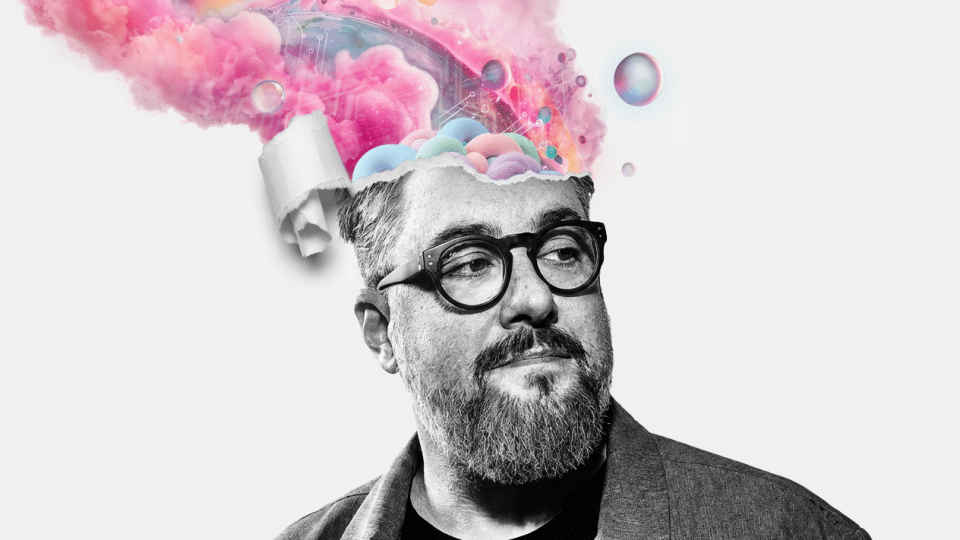
To understand what this transformation means for brands, we spoke with Mark Bennett, EVP of Experiential Media at Mod Op who shared how the blend of human creativity and AI is redefining craft, compressing timelines, and turning live environments into living, responsive systems.
How is the blend of human creativity and machine intelligence reshaping modern marketing—and what new possibilities does that unlock for brands?
The way I see it from the experiential marketing side, it’s less about replacement and more about compression. What used to take weeks of concepting, production prep, and iteration can now happen in hours. That means we can spend more time thinking, creating, and strategizing while AI handles the visual iterations. We get to focus on the stuff that actually matters: the experience design, the human connection, the physical details, the moments that make people stop and feel something. For brands, that unlocks the ability to personalize at scale without losing the craft. You can build an experience that feels bespoke for thousands of people simultaneously. That’s a level of craft at scale that simply didn’t exist before.
What emerging capability across AI, data, or technology do you believe will most reshape the industry over the next 12–18 months?
Real-time personalization in physical environments. We’re getting close to a point where a live event or an in-store activation can respond dynamically to who’s actually in the room, what they’re responding to, what’s landing, what’s not. Combine computer vision, behavioral data, and AI-driven content systems and suddenly the experience is almost alive. That’s going to fundamentally change how we produce and how brands think about live touchpoints. We won’t say “we built this experience” anymore. We’ll say “we built an ongoing, real-time adaptive experience engine” that shifts based on the people, the music, the crowd energy, and the cultural moment. No two experiences will ever be exactly the same.
What mindset shift will be most important for brands that want to thrive in an AI‑accelerated marketing landscape?
Stop treating AI like a cost-cutting tool and start treating it like a creative collaborator. The brands that are going to win aren’t the ones using AI to do the same things cheaper. They’re the ones using it to do things that weren’t possible before. That requires a different brief, a different internal culture, and honestly a different relationship with your agency partners. You have to create a culture of experimentation and accept that not everything will work. But that’s always been true in experiential marketing. You prototype, you iterate, you learn. The difference now is you can do all of that in the morning and have a whole new set of human and AI-driven concepts ready for the client by afternoon.
Where does human judgment matter most as automation becomes more embedded in marketing workflows?
Human judgment matters most at every stage: the beginning, the middle, and the end. At the start it’s about intent, understanding why we’re doing this, what we want people to feel, and what the brand actually stands for. In the middle it’s about knowing how to massage the inputs, refine the prompts, and push back on the output until it actually feels right. And at the end it’s the final read on whether something is resonant or just technically correct. I’ve seen AI produce work that checks every box and still feels hollow. The people in the room who say “this isn’t it yet” are irreplaceable at every stage. Bottom line, you need human judgment at every step to make the AI sing.
What’s one misconception about AI‑driven marketing that you wish more brand leaders understood?
AI is not a magic solution. It’s a tool. A genuinely incredible tool, but still just a tool. And like any great tool, it’s only as good as the people using it. If you don’t invest in building the team and the culture that knows how to use it well, it just sits in the toolbox gathering dust. A lot of brands are going to be disappointed because they went in with the wrong expectations. Use it like a search engine and you’ll get search engine results. Train on it, push its boundaries, and you’ll get things you never could have imagined. Good strategy gets sharper with AI behind it, but garbage in is still garbage out, just faster and at greater expense.
Why This Moment Matters
The tension ahead isn’t automation versus creativity—it’s whether brands use AI to reduce craft or to elevate it. Mark points to a clear path forward: treat AI as an accelerant, keep humans in the loop at every stage, and build experiences that respond to people in real time. The brands that get this balance right will define the next era of experiential marketing.
The Latest
We study the game as hard as we play it.
Learn with us what’s now and next.